Aluminium Alloy Bar & Profile Stock
Lightweight, corrosion-resistant and fast to machine — aluminium bar and profiles for brackets, housings, frames and precision-turned components.
Where aluminium earns its place
Aluminium alloys are around a third the density of iron and conduct heat several times better, which is why they dominate components where mass, inertia or heat dissipation drives the design. They also machine at high cutting speeds with low tool wear, so machined aluminium parts are quick to prototype and quick to produce.
The trade-off is stiffness: aluminium's elastic modulus is roughly a third that of iron, so a like-for-like substitution deflects considerably more. Lightweighting an existing iron component almost always means redesigning the section rather than simply changing the material.
We supply aluminium bar and profile stock, and machine finished components to drawing, quoting alloy and temper against recognised designations rather than generic trade names.
Common wrought aluminium families
Designations follow EN 573; extruded bar, rod and profiles are covered by EN 755 and ASTM B221.
| Alloy Family | Character | Typical Use |
|---|---|---|
| 2000 series (Al–Cu) | Heat-treatable copper alloys with high strength and, in free-machining variants such as 2011, excellent chip formation. Corrosion resistance is lower than other families, so protection or cladding is often specified. | Fittings, fasteners, precision-turned parts |
| 5000 series (Al–Mg) | Non heat-treatable magnesium alloys, strengthened by work hardening. Recognised for marine and weldable service — 5083 is a long-standing seawater alloy. | Marine components, welded structures, tanks |
| 6000 series (Al–Mg–Si) | The general engineering workhorses. 6061 and 6082 combine good strength in the T6 temper with good corrosion resistance, weldability and machinability, and extrude readily into bar and profiles. | Machined brackets, frames, housings, shafts |
| 7000 series (Al–Zn) | The highest-strength conventional aluminium alloys, such as 7075. Used where strength-to-weight governs; weldability and corrosion resistance are more restricted than in the 6000 series. | Highly loaded structural and tooling parts |
Specify alloy and temper together — for example 6082-T6 — and name the applicable standard. Mechanical property requirements should be taken from that standard for the exact alloy, temper and product form.
Supplied as stock or as finished parts
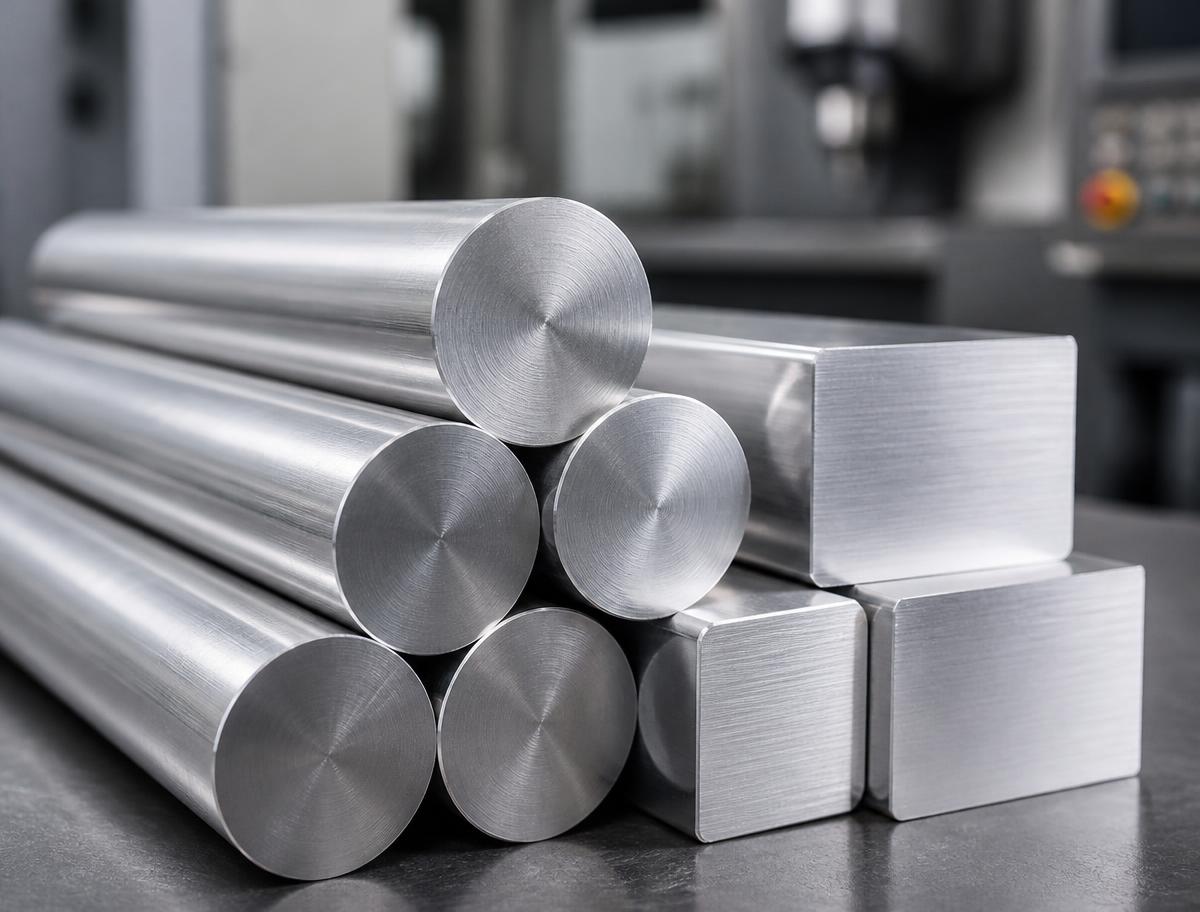
Round Bar
Turned and drawn or extruded round sections for shafts, spacers, bushings and rotational parts.
Square & Rectangular Bar
Flat and square sections for brackets, plates, clamps and prismatic machined bodies.
Extruded Profiles
Standard and custom profiles where a section can be extruded instead of machined from solid.
Machined Components
Finished parts produced to your drawing on our CNC turning and milling cells.
Where aluminium bar is used
- Lightweight brackets, mounts and machine frames
- Equipment housings and covers
- Heat sinks and cooling components
- Precision-turned fittings and spacers
- Handling, packaging and automation components
- Marine and outdoor fittings in suitable alloys
Aluminium bar — frequently asked questions
Ready to work with Force Machining?
Send drawings, specs or a rough idea — our engineers get back within one business day.