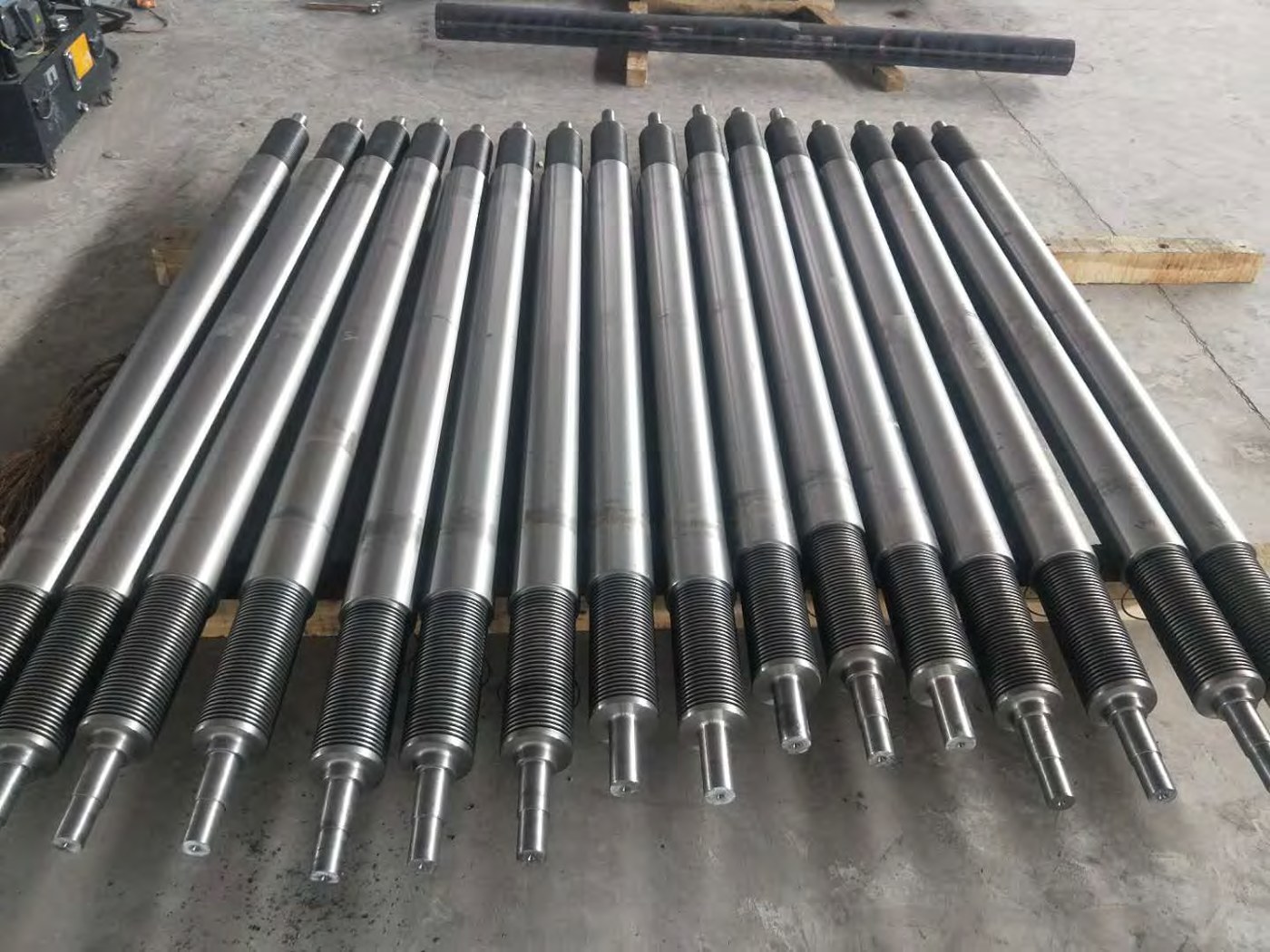
Material cost is the number on the purchase order. Cost per accepted finished part is the number that decides whether a job is profitable. Continuous cast iron bar wins on the second one, and the reasons are specific rather than promotional.
The seven advantages below are the ones customers measure when they convert a part from sand casting or from carbon steel bar.
1. No sand skin to destroy the first cut
A sand casting arrives with a burnt-in silica skin that is abrasive enough to wear a carbide edge within a handful of parts. Continuous cast bar solidifies against graphite, so the first cut engages clean metal at full parameters — no sacrificial roughing pass, no scrapping the first insert of every batch.
2. Uniform hardness across the section
Bar hardness sits at 180–210 HB with no chill zones or local hard spots, against 200–250 HB with variation in sand-cast material. One parameter set holds across the whole batch, which is what makes reliable unattended running possible.
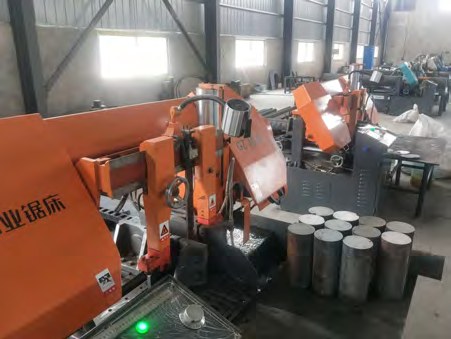
3. About 50% higher cutting efficiency
Comparative testing against sand-cast material of the same grade puts cutting efficiency roughly 50% higher. Higher speeds and feeds are sustainable because the metal is homogeneous and the tool never encounters an inclusion.
4. Clean chip breaking at the graphite phase
Graphite — flakes in gray iron, nodules in ductile — interrupts the chip and breaks it into short, manageable segments. No bird-nesting, no operator intervention, simple swarf handling. This is the free-machining benefit that leaded steel provides chemically, without the hazard or the disposal cost.
5. Low residual stress and dimensional stability
Directional, uniform solidification leaves low internal stress. Parts do not spring after roughing, so the finishing pass holds tolerance and post-machining distortion complaints disappear. For thin asymmetric parts cut from heavy sections, a stress-relief anneal before finishing remains good practice.
6. No pattern, tooling or minimum-order penalty
Bar stock carries no pattern cost and no tooling lead time. A one-off prototype and a 500-piece run use the same material, so design iterations cost machine time only — a decisive advantage for spare parts where the original pattern no longer exists.

7. Higher yield and less late-stage scrap
The expensive scrap is the part that fails after all the machining time has been invested. Sand holes and shrinkage cavities are usually found at that point. With bar, they do not exist, so yield rises and the cost of quality falls.
| Shape | Size (mm) | Tolerance — gray iron | Tolerance — ductile iron | Max. bow (mm/m) gray / ductile | Machining allowance (mm) gray / ductile |
|---|---|---|---|---|---|
| Round | Φ20 – Φ45 | 0 / +1.0 | 0 / +2.0 | ≤5.0 / ≤6.0 | 0.5 / 0.8 |
| Round | Φ45 – Φ65 | 0 / +1.5 | 0 / +2.0 | ≤3.0 / ≤4.0 | 1.5 / 1.5 |
| Round | Φ65 – Φ100 | 0 / +2.0 | 0 / +2.5 | ≤2.0 / ≤2.5 | 2.0 / 2.0 |
| Round | Φ100 – Φ200 | 0 / +3.0 | 0 / +4.0 | ≤2.0 / ≤2.5 | 0.5 / 3.5 |
| Round | Φ200 – Φ280 | −1.0 / +5.0 | −1.0 / +6.0 | ≤2.0 / ≤2.5 | 1.5 / 6.0 |
| Round | Φ280 – Φ500 | −1.0 / +8.0 | −2.0 / +10.0 | ≤2.0 / ≤2.5 | 2.0 / 8.0 |
| Square | Thickness 25 – 50 | 0 / +1.0 | 0 / +2.5 | ≤5.0 / ≤5.5 | 2.0 / 2.0 |
| Square | Thickness 50 – 100 | 0 / +1.5 | 0 / +3.0 | ≤4.0 / ≤4.5 | 3.0 / 3.0 |
| Square | Thickness 100 – 200 | 0 / +5.0 | 0 / +8.0 | ≤3.0 / ≤3.5 | 2.0 / 4.5 |
| Square | Thickness 200 – 320 | −1.0 / +8.0 | 0 / +10.0 | ≤3.0 / ≤3.5 | 3.0 / 6.0 |
| Semicircle | Height 40 – 85 | 0 / +1.5 | 0 / +2.0 | ≤4.0 / ≤4.5 | 2.0 / 2.5 |
| Semicircle | Height 85 – 180 | 0 / +2.5 | 0 / +3.0 | ≤3.0 / ≤3.5 | 3.0 / 4.0 |
As-cast dimensional tolerance and machining allowance, Force Machining continuous cast bar
- No sand skin means full cutting parameters from the first pass and far longer insert life.
- Uniform 180–210 HB hardness supports one parameter set per batch and unattended running.
- Cutting efficiency is around 50% higher than sand-cast material of the same grade.
- Graphite breaks chips cleanly, giving free-machining behaviour without leaded steel.
- No pattern or tooling cost makes prototypes, spares and low volumes economical.