QT500-7 is the most widely specified ductile iron grade in general engineering. The designation means a minimum 500 MPa tensile strength with 7% minimum elongation; the international equivalents are EN-GJS-500-7, GGG50, FCD500 and ASTM 70-50-05.
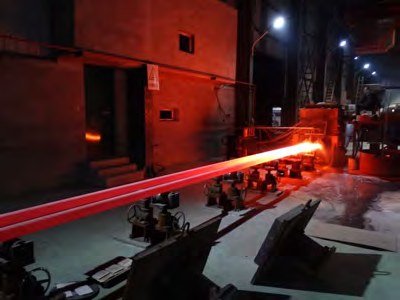
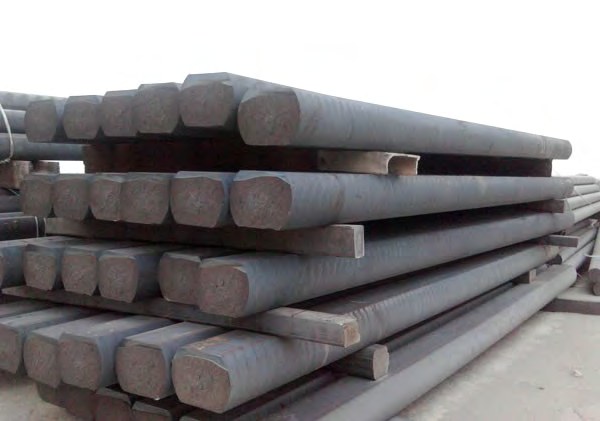
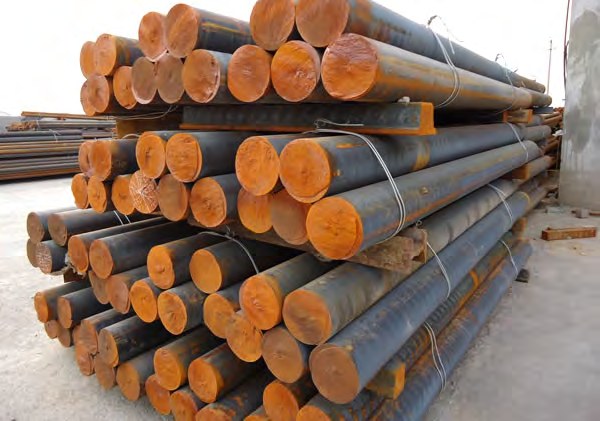
Produced as continuous cast bar, QT500-7 consistently measures above its nominal minima — 500–600 MPa tensile and ≥12% elongation — because the dense, high-nodule-count structure removes the defects that hold sand castings back.
That combination puts it directly against 45# medium-carbon steel for machined components, and it usually wins on total cost.
Specification
| Property | Value |
|---|---|
| Tensile strength Rm | 500–600 MPa |
| Yield strength Rp0.2 | >320 MPa |
| Elongation δ | ≥12% |
| Hardness | 180–210 HB |
| Fatigue strength S-1 | 155 MPa |
| Spheroidisation rate | ≈90%, nodule grading 1–2 |
| Matrix | Pearlite–ferrite |
QT500-7 continuous cast bar — measured properties
| C | Si | Mn | P | S | Cr | Ni |
|---|---|---|---|---|---|---|
| 3.3–3.7 | 2.2–2.7 | 0.25–0.4 | ≤0.036 | 0.011–0.012 | ≤0.36 | ≤0.25 |
QT500-7 chemistry (%)
QT500-7 versus 45# carbon steel
| Item | 45# carbon steel | QT500-7 ductile iron bar | Remarks |
|---|---|---|---|
| Tensile strength Rm (MPa) | ≥600 | 500–600 | Similar |
| Yield strength Rp (MPa) | ≥355 | >320 | Similar |
| Yield ratio σ0.2 / Sb | 0.59 | 0.64 | — |
| Elongation δ (%) | ≥16 | ≥12 | 45# steel slightly higher |
| Fatigue strength S-1 (MPa) | 150 | 155 | Similar |
| Hardness HB | <229 | 180–210 | Similar |
| Damping / self-lubrication | Low | High | Graphite nodules |
QT500-7 ductile iron bar vs. 45# medium-carbon steel
Strength, yield and fatigue are effectively equivalent. 45# steel keeps a small elongation advantage. QT500-7 wins on everything that touches manufacturing cost: chip formation, tool life, cutting speed, damping and self-lubrication from the graphite nodules — plus a lower density that reduces part weight for the same envelope.
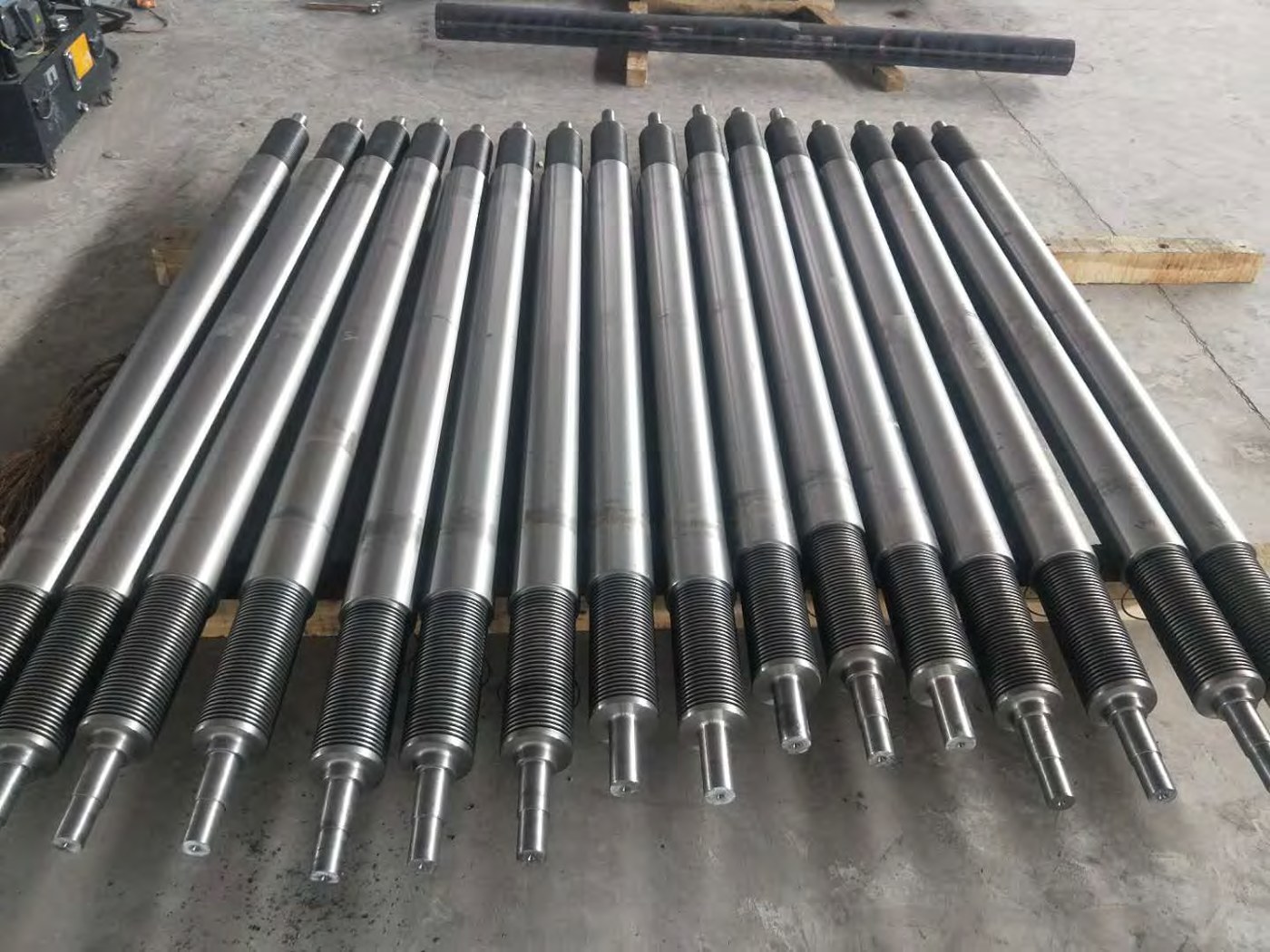
Machining QT500-7
- Uncoated or CVD-coated carbide performs well; ceramics are viable for high-speed finishing of pearlitic sections.
- Hardness is uniform at 180–210 HB with no chill or hard spots, so a single cutting parameter set holds across the batch.
- Chips break cleanly at the graphite nodules, which keeps swarf handling simple and unattended running safe.
- Dry cutting is common; coolant is used mainly for dimensional stability on close-tolerance work.
- No sand skin, so first-cut depth can be set by the machining allowance rather than by an unknown scale layer.
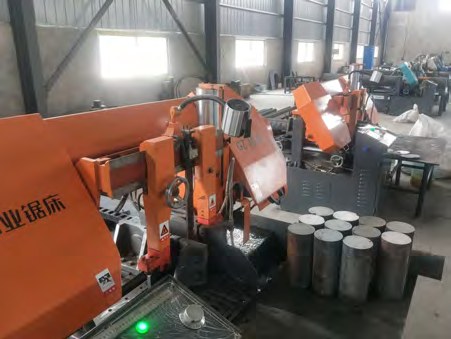
Typical applications
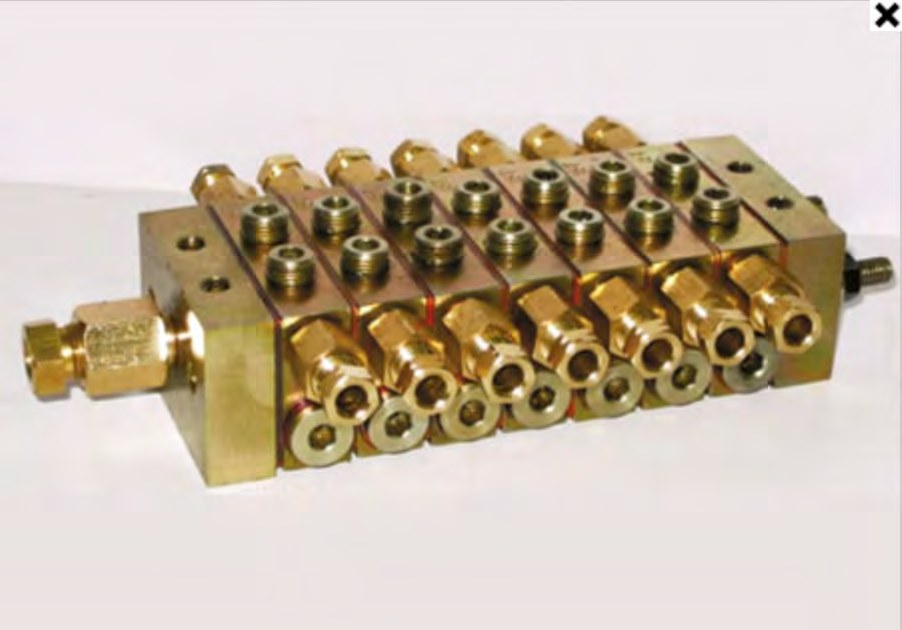
- Hydraulic valve bodies, manifolds and cylinder heads requiring pressure tightness.
- Drive shafts, spindles, eccentrics and crank components.
- Gear blanks, sprocket blanks and pulley hubs.
- Pump housings and compressor components machined from solid.
- Machine-tool brackets, levers and mounting blocks under bending load.
- QT500-7 = EN-GJS-500-7 = GGG50 = FCD500 = ASTM 70-50-05.
- Continuous cast QT500-7 measures 500–600 MPa tensile, >320 MPa yield and ≥12% elongation at 180–210 HB.
- Strength, yield and fatigue are comparable with 45# carbon steel, at substantially lower machining cost.
- Uniform hardness and clean chip breaking make it well suited to unattended CNC production.
- It is the default choice for pressure-tight hydraulic bodies machined from solid.