A drawing that calls for QT500-7 (EN-GJS-500-7 / GGG50 / 70-50-05) does not tell you how the iron was made. Two suppliers can both certify the grade and deliver metal that behaves completely differently on the machine and in service.
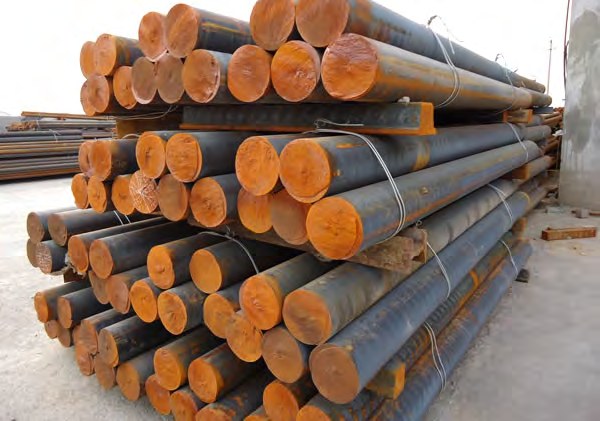
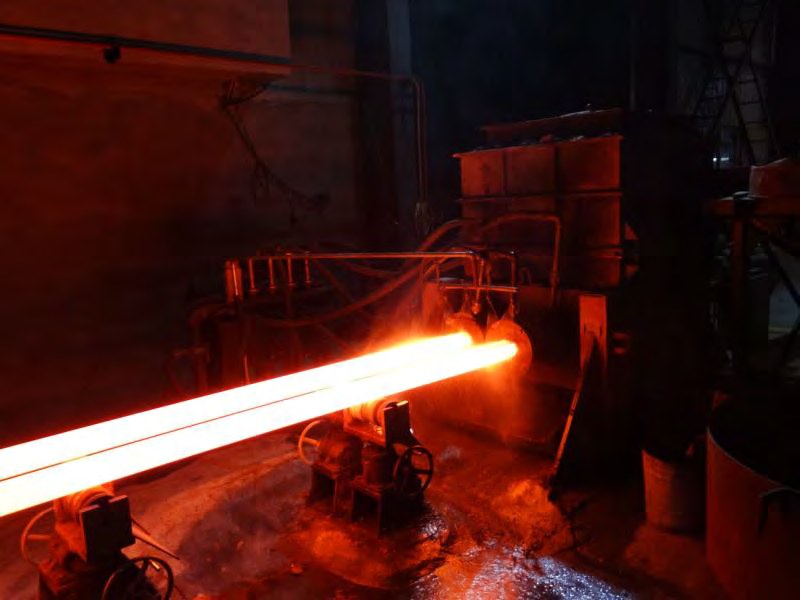
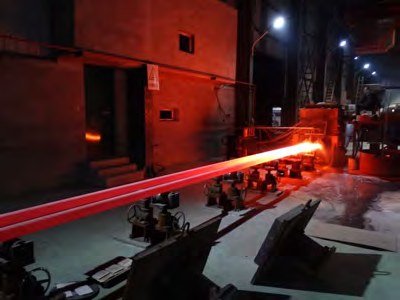
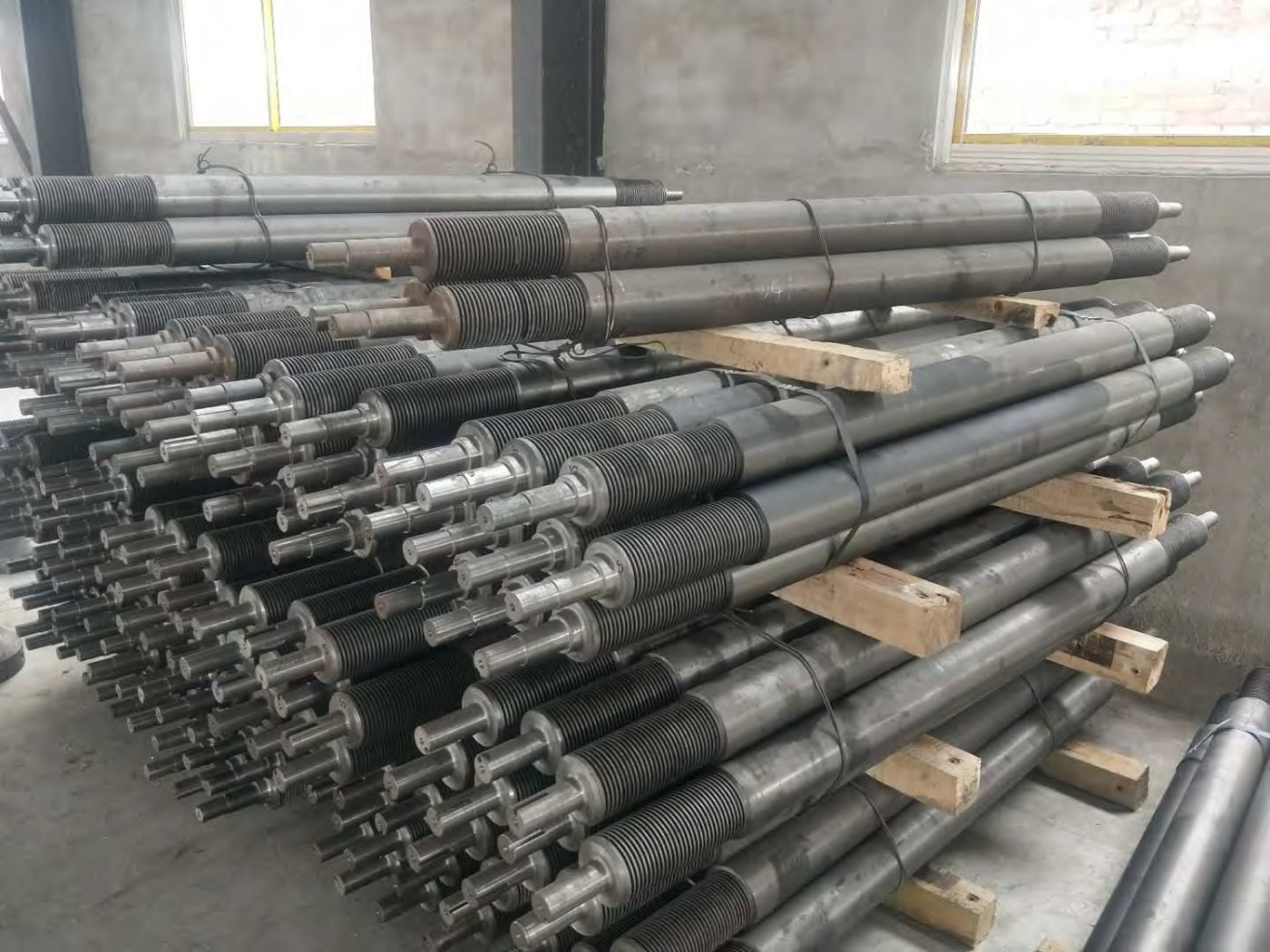
The difference is the solidification route. Sand casting solidifies a fixed volume of iron inside an insulating mould, with feeders trying to compensate for shrinkage. Continuous casting solidifies iron progressively against a water-cooled graphite die, with liquid metal continuously feeding the solidification front.
The table below is taken from our own comparative testing of QT500-7 produced by both routes.
Mechanical and metallurgical comparison
| Item | Continuous cast bar | Sand casting | Remarks |
|---|---|---|---|
| Tensile strength Rm (MPa) | 500–600 | 178–290 | Sand casting substandard |
| Elongation δ (%) | ≥12 | 2–5 | Sand casting substandard |
| Hardness HB | 180–210 | 200–250 | — |
| P (%) | ≤0.036 | 0.09 | Sand casting too high |
| S (%) | 0.011–0.012 | 0.02 | S < 0.013 preferred |
| Spheroidisation rate (%) | 90 | 50–65 | Sand casting substandard |
| Nodule grading | 1–2 | 4–6 | Sand casting substandard |
| Sand holes / graphite flotation | None | Present | Continuous cast is sound |
| Cutting efficiency | High | Normal | Bar stock ≈50% higher |
| Yield rate | High | Poor | Less scrap per finished part |
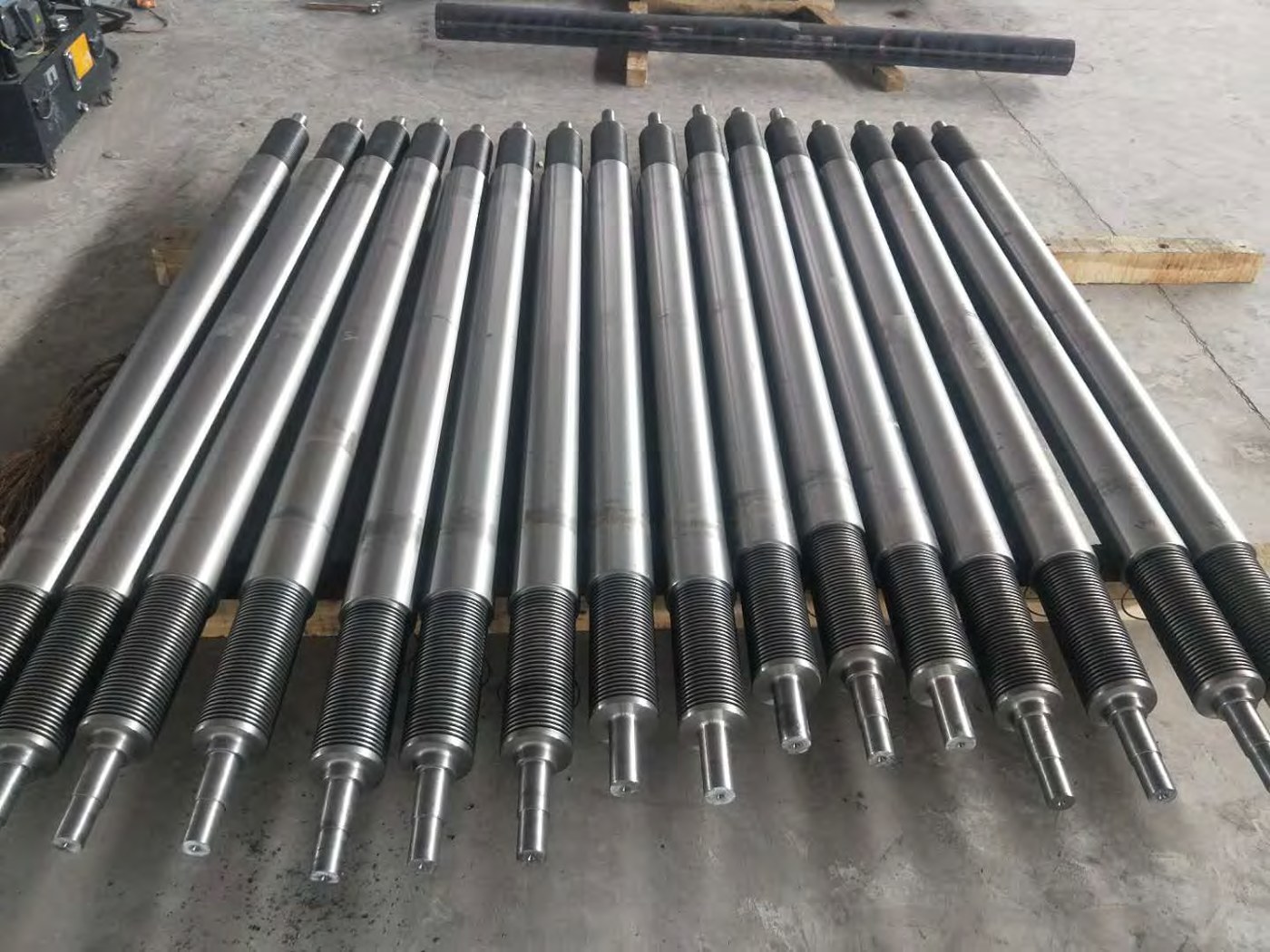
QT500-7 continuous cast bar vs. QT500-7 sand casting
The mechanical gap is not a small percentage — continuous cast bar delivers roughly double the tensile strength and three to five times the elongation of the same nominal grade in sand. The cause is visible under the microscope: spheroidisation around 90% with nodule grading 1–2, against 50–65% and grading 4–6.
Defects: the practical difference
- Sand holes — continuous cast bar never touches a sand mould, so inclusion-driven scrap disappears.
- Graphite flotation — the segregation band that appears in heavy sand sections is absent in continuously cast bar.
- Shrinkage porosity — constant liquid feed behind the solidification front removes the cavity mechanism entirely.
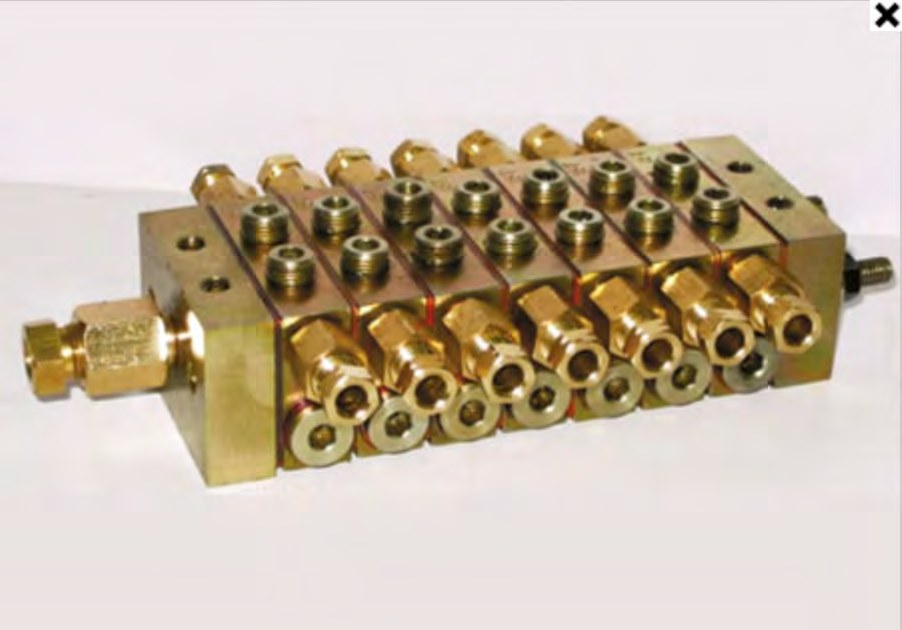
- Pressure tightness — hydraulic blocks machined from bar pass pressure test without impregnation.
- Internal stress — directional, uniform cooling leaves low residual stress, so parts stay dimensionally stable after machining.
Machining economics
Cutting efficiency on continuous cast bar is measured at roughly 50% higher than on sand-cast material of the same grade. Three factors drive it: uniform hardness (180–210 HB against 200–250 HB with local hard spots), the absence of a burnt-in sand skin that destroys carbide edges, and no interruption to change an insert after hitting an inclusion.
Yield also improves. Sand castings are scrapped after machining time has already been invested; bar defects, being essentially non-existent, do not consume machine hours before they are discovered.
Where sand casting is still the right answer
- Complex hollow geometry with cores — housings, pump bodies, gearboxes.
- Thin ribbed walls that cannot be machined from solid economically.
- High annual volumes where pattern and tooling amortise quickly.
- Very large or highly asymmetric parts outside the bar size envelope.
Force Machining supplies both routes, so the recommendation is not commercially biased: we quote iron castings and continuous cast bar side by side and compare the total cost per finished part, not the kilogram price.
- Continuous cast QT500-7 measures 500–600 MPa tensile and ≥12% elongation; sand-cast QT500-7 commonly measures 178–290 MPa and 2–5%.
- Spheroidisation is around 90% (grading 1–2) in bar versus 50–65% (grading 4–6) in sand.
- Bar has no sand holes, no graphite flotation and no shrinkage porosity, so no impregnation is needed for pressure tightness.
- Cutting efficiency is about 50% higher, and scrap is discovered before machine time is invested rather than after.
- Sand casting remains preferable for cored, thin-walled or very high-volume geometry.