Material Comparison

Cast Iron vs. Bronze

The classic bushing decision: graphite-lubricated iron or a copper–tin alloy. Where each earns its place.

Quick Answer

Cast iron vs. Bronze

Cast iron is an iron–carbon alloy whose free graphite provides useful self-lubrication, making it a cost-effective choice for slow to moderate-speed sliding surfaces, guides and structural wear parts. Bronze is a copper-based alloy with better corrosion resistance, higher thermal conductivity, low friction against steel and good embeddability, which is why it dominates plain bearings under higher loads or marginal lubrication and in marine and chemical environments. Cast iron generally wins on cost and rigidity; bronze wins on conformability, corrosion resistance and bearing performance.

The choice appears whenever a sliding interface has to be designed: bushings, wear strips, guide plates, worm gears, valve components and pump parts. Both materials have long service records, and both are standardised — for example EN 1561 and ASTM A48 for grey iron, and EN 1982 and the ASTM B-series specifications for cast copper alloys.

The comparison below deliberately stays with mechanisms and behaviour rather than quoting property values, because bronze covers a wide family of alloys — tin bronze, leaded bronze, aluminium bronze and others — whose properties differ significantly.

Reference Standards
  • EN 1561 / ASTM A48 — grey cast iron
  • EN 1982 — cast copper alloys
  • ASTM B-series — cast copper alloy specifications
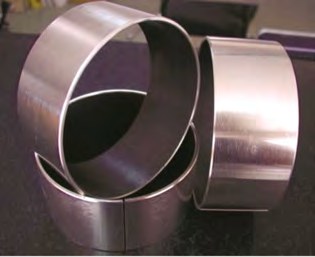
Machined bushings and bearing sleeves
Detailed Comparison

Understanding the difference

COMP. 01 // ANALYSIS
SEC. 01

What The Two Materials Are

Cast iron is iron with a high carbon content, part of which exists as free graphite. In grey iron that graphite is present as flakes which act as a solid lubricant at a sliding interface, giving the material its long-standing reputation for guides and wear surfaces.

Bronze is a copper-based alloy family. Tin bronze offers general bearing duty, leaded variants improve conformability and running-in behaviour, and aluminium bronze provides higher strength and excellent resistance to seawater and many chemicals.

  • Grey iron: free graphite gives self-lubricating character at low cost.
  • Bronze: copper-alloy family selected by duty — tin, leaded or aluminium bronze.
  • Cast copper alloys are specified under EN 1982 and ASTM B-series specifications.
SEC. 02

Tribological Behaviour

In a sliding pair, bronze against steel offers low friction, good conformability and the ability to embed small hard particles rather than let them score the shaft. That behaviour is the reason bronze remains the standard plain-bearing material where loads are significant or lubrication is intermittent.

Cast iron works well as a sliding surface at lower speeds and under adequate lubrication, and it resists scuffing thanks to graphite. It is stiffer than bronze and less forgiving of misalignment or debris, so it is often the better choice for guides, wear plates and slow-moving pivots rather than for high-speed bearings.

SEC. 03

Corrosion And Thermal Behaviour

Bronze has the clear advantage in wet, marine and many chemical environments, where unprotected cast iron corrodes. Bronze also conducts heat better than iron, which helps carry frictional heat away from a bearing interface.

Cast iron requires coating, painting or an inherently dry environment where corrosion matters, but it offers excellent damping and rigidity that a bronze component of the same size cannot match.

  • Bronze: superior corrosion resistance, particularly aluminium bronze in seawater.
  • Bronze: higher thermal conductivity helps dissipate frictional heat.
  • Cast iron: better damping and stiffness; needs protection in wet service.
SEC. 04

Machinability And Cost

Both materials machine well. Grey iron produces short, free-breaking chips; leaded bronzes are also very free-machining, while aluminium bronze is tougher and demands more rigid setups and appropriate tooling.

Cost is usually the decisive practical factor: copper alloys carry a substantially higher raw-material price than iron. Many designs therefore use iron for the structure and bronze only where sliding performance or corrosion resistance genuinely requires it — for example an iron housing with a bronze bushing.

Comparison Table

Factor-by-factor overview

COMP. 02 // TABLE
FactorCast ironBronze
Base alloyIron–carbon with free graphiteCopper-based (tin, leaded or aluminium bronze)
Typical standardsEN 1561 / ASTM A48; EN 1563 / ASTM A536EN 1982; ASTM B-series cast copper alloys
Friction against steelGood with graphite, adequate lubrication neededLow; good under marginal lubrication
Conformability and embeddabilityLowGood, especially leaded grades
Corrosion resistanceLow without protectionHigh; aluminium bronze excels in seawater
Thermal conductivityGoodHigher
Stiffness and dampingHigher stiffness, excellent dampingLower
MachinabilityExcellent (grey iron)Excellent for leaded grades; tougher for aluminium bronze
Relative material costLowerHigher
Typical Applications

Where each option is normally used

COMP. 03 // APPLICATIONS

Cast iron

  • Machine guides, slides and wear plates
  • Slow-moving pivots and bushings
  • Pump and valve bodies in dry service
  • Housings and structural wear components
  • Brake and clutch friction surfaces

Bronze

  • Plain bearings and bushings under load
  • Worm gears and thrust washers
  • Marine fittings and propeller components
  • Valve seats and pump wear parts
  • Applications with marginal lubrication
Advantages & Limitations

Honest trade-offs on both sides

COMP. 04 // TRADE-OFFS

Cast iron

Advantages
  • Significantly lower material cost
  • Self-lubricating graphite structure
  • High stiffness and excellent damping
  • Excellent machinability in grey grades
  • Well suited to large structural wear surfaces
Limitations
  • Corrodes without protection
  • Brittle in grey grades
  • Less forgiving of misalignment and debris
  • Not suited to marine or aggressive chemical service

Bronze

Advantages
  • Low friction and good bearing behaviour
  • Excellent corrosion resistance
  • Conforms and embeds debris rather than scoring shafts
  • Higher thermal conductivity
  • Performs under marginal lubrication
Limitations
  • Higher and more volatile material cost
  • Lower stiffness than iron
  • Some grades contain lead, restricted in certain applications
  • Aluminium bronze requires more demanding machining
How To Choose

Material-selection considerations

COMP. 05 // SELECTION
  • 01Is the interface wet, marine or chemically aggressive? Bronze is usually the necessary answer.
  • 02Are loads high or lubrication intermittent? Bronze bearing behaviour is more forgiving.
  • 03Is the part a large guide, slide or structural wear surface? Cast iron gives rigidity and damping at far lower cost.
  • 04Can the design combine both — an iron body with bronze inserts only at the sliding interface?
  • 05Check regulatory limits on lead content before specifying a leaded bronze for potable water or food contact.

Practical Conclusion

Cast iron and bronze are rarely direct substitutes. Cast iron is the economical, rigid, well-damped material for structures and moderate sliding duty; bronze is the specialist bearing and corrosion material. The most cost-effective designs frequently use both, placing bronze only where the tribology or the environment demands it.

Discuss Your Component
FAQ

Frequently asked questions

COMP. 06 // FAQ

Start a project

Ready to work with Force Machining?

Send drawings, specs or a rough idea — our engineers get back within one business day.