
The Structural Difference
In grey iron the graphite forms as flakes distributed through the matrix. Those flakes behave mechanically like internal discontinuities: they interrupt crack paths, absorb vibration energy and conduct heat well, but they also mean the material has essentially no useful elongation and fails without plastic deformation.
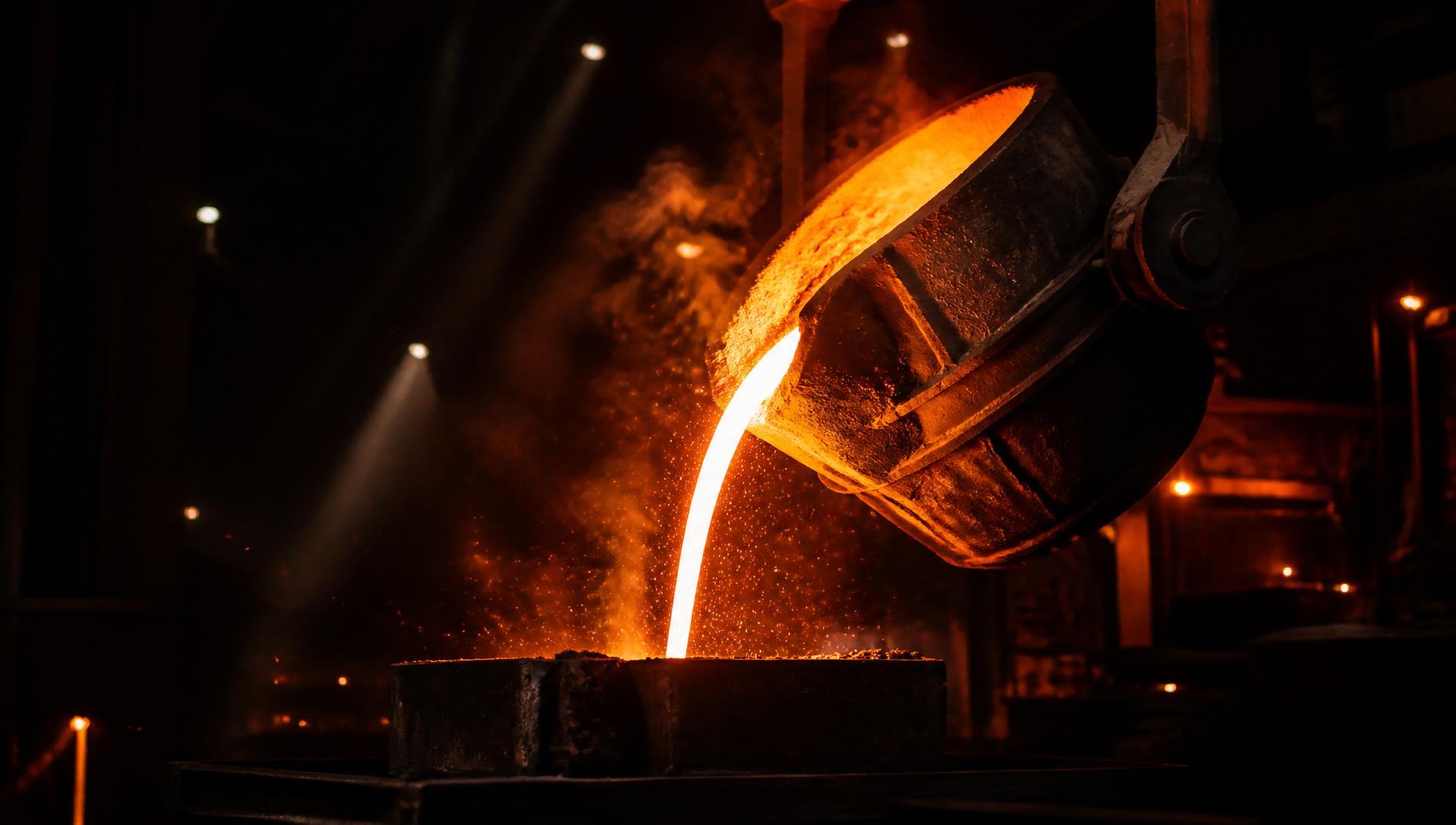
In ductile iron, magnesium is added to the melt, changing the growth of graphite so that it forms compact nodules. The surrounding metallic matrix stays continuous, so load transfers through metal rather than around flakes. The result is a cast iron that yields, elongates and tolerates impact.
- Grey iron: flake graphite, interrupted matrix, brittle fracture behaviour.
- Ductile iron: nodular graphite from magnesium treatment, continuous matrix, measurable elongation.
- Graphite form is classified in ISO 945 and verified on polished, etched samples.