
Material Comparison

Ductile Iron vs. Steel

Where a cast nodular iron can replace a steel casting, forging or fabrication — and where steel remains the right answer.

Quick Answer

Ductile iron vs. Steel

Ductile iron is a cast iron with nodular graphite, offering good strength with useful ductility, excellent castability, better damping and generally easier machining than steel. Steel covers a far wider property range, reaches higher strength and toughness — especially at low temperature — is readily welded and can be forged or rolled into wrought forms with directional properties. Ductile iron is typically chosen where a complex shape can be cast to near-net form and the design does not demand steel-level toughness or weldability. Steel is chosen where high toughness, welded construction, wrought forms or extreme service conditions govern.

This is one of the most common substitution questions in industrial design, and it is usually framed too narrowly as 'which is stronger'. Ductile iron grades in EN 1563 and ASTM A536 overlap the lower and middle range of common structural and machinery steels, so strength alone rarely settles the choice.

The practical comparison covers castability, damping, notch sensitivity, weldability, machining behaviour and how the part will be produced at volume.

Reference Standards
  • EN 1563 / ASTM A536 — ductile iron
  • EN 10025, EN 10083 — structural and engineering steels
  • ASTM A216 — carbon steel castings
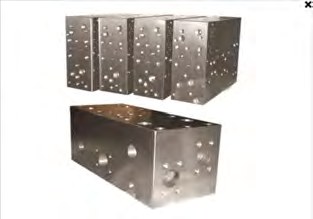
Precision machined iron and steel component blocks
Detailed Comparison

Understanding the difference

COMP. 01 // ANALYSIS
SEC. 01

Property Range And Behaviour

Steel is not one material but a family spanning low-carbon structural grades, quenched and tempered alloy steels, tool steels and stainless steels. Its accessible strength and toughness range is much wider than that of cast iron, and low-temperature impact toughness in particular is a steel strength.

Ductile iron delivers a useful combination: strength comparable to lower and mid-range steels, real elongation, higher damping than steel and lower notch sensitivity in many geometries because the graphite nodules do not act as sharp flaws.

  • Steel: broadest property range, best low-temperature toughness, wrought and welded forms available.
  • Ductile iron: good strength with ductility, better damping, excellent castability.
  • Both families are fully standardised — specify by grade, not by material name.
SEC. 02

Production Route Differences

Ductile iron pours at lower temperature than steel and has better fluidity and lower solidification shrinkage, so complex, thin-walled or intricate castings are easier and more economical to produce. This is a major reason ductile iron often replaces multi-part steel fabrications: one casting can consolidate several welded pieces.

Steel is available as plate, bar, tube and forgings, which makes welded construction and directional strength straightforward. Steel castings are entirely practical but generally require more elaborate feeding and higher pouring temperatures than ductile iron.

SEC. 03

Machinability And Fabrication

Ductile iron generally machines more freely than steel of similar hardness, thanks to the graphite nodules, and normally produces short chips that clear easily. Where a design involves extensive material removal, that difference translates directly into cycle time and tool cost.

Steel is the clear choice where welding is central to the design. Ductile iron can be welded with qualified procedures and appropriate consumables, but it demands care and is not a routine fabrication material.

  • Ductile iron: lower cutting forces, short chips, good tool life.
  • Steel: routine weldability, wide range of heat treatments and surface treatments.
  • Both accept common surface engineering, but process selection must match the grade.
SEC. 04

Cost And Volume Considerations

For shaped components at repeat volume, ductile iron often wins on total cost: lower melting energy, better yield, less machining and consolidation of assemblies into a single part. For simple prismatic parts, small quantities or welded structures, steel bar and plate are usually cheaper and faster.

Because both are commodity engineering materials with volatile input costs, base the comparison on the finished part rather than on price per kilogram.

Comparison Table

Factor-by-factor overview

COMP. 02 // TABLE
FactorDuctile ironSteel
Material familyCast iron with nodular graphiteIron–carbon alloys, wrought and cast
Governing standardsEN 1563, ASTM A536EN 10025, EN 10083, ASTM A36, ASTM A216 and others
Strength rangeGood, standardised by gradeWider, reaching much higher levels
Ductility and toughnessUseful elongation; lower toughness than steelHigh, including low-temperature service
Vibration dampingBetter than steelLower
CastabilityExcellent — thin walls, complex shapesPractical but more demanding
WeldabilityPossible with qualified proceduresRoutine
MachinabilityGenerally easier at similar hardnessGrade dependent
Available formsCastings and continuous-cast barPlate, bar, tube, forgings, castings
Typical Applications

Where each option is normally used

COMP. 03 // APPLICATIONS

Ductile iron

  • Pump and valve bodies
  • Gearbox and machine housings
  • Crankshafts and hubs
  • Pipe and pressurised fittings
  • Consolidated replacements for welded assemblies

Steel

  • Welded frames and structures
  • Highly loaded shafts and gears
  • Pressure vessels and piping
  • Low-temperature and cryogenic service
  • Wear and tooling applications
Advantages & Limitations

Honest trade-offs on both sides

COMP. 04 // TRADE-OFFS

Ductile iron

Advantages
  • Excellent castability for complex geometry
  • Good strength with measurable ductility
  • Better damping than steel
  • Often easier and cheaper to machine
  • Can consolidate multi-part fabrications
Limitations
  • Lower toughness ceiling than steel
  • Welding requires qualified procedures
  • Only available as castings or cast bar
  • Section-sensitive properties in castings

Steel

Advantages
  • Very wide strength and toughness range
  • Excellent low-temperature toughness
  • Routine weldability
  • Available in wrought forms with directional properties
  • Broad heat-treatment and surface-treatment options
Limitations
  • More difficult and costly to cast in complex shapes
  • Lower damping capacity
  • Higher melting and pouring temperatures
  • Often more machining effort at comparable hardness
How To Choose

Material-selection considerations

COMP. 05 // SELECTION
  • 01Is the part geometrically complex or hollow, and made repeatedly? Ductile iron casting deserves serious evaluation.
  • 02Does the design rely on welding as an assembly method? Steel is the pragmatic choice.
  • 03Does service include low temperature, high impact energy or fracture-critical duty? Specify steel with defined impact requirements.
  • 04Does the assembly suffer from vibration or noise? Ductile iron's damping advantage may be decisive.
  • 05Compare finished-part cost — material, machining, assembly and inspection — never price per kilogram alone.

Practical Conclusion

Ductile iron and steel overlap enough that many components could be made from either, so the decision should be driven by production route and service conditions rather than by material prestige. Cast the shape in ductile iron when geometry and volume favour casting; use steel when toughness, welding or wrought form governs the design.

Discuss Your Component
FAQ

Frequently asked questions

COMP. 06 // FAQ

Start a project

Ready to work with Force Machining?

Send drawings, specs or a rough idea — our engineers get back within one business day.